
Do Your Teams Have a Champion, or Just a Friend?

Why the most important person in their deals might not exist yet
Introduction
Do You Have a Champion, or Just a Friend?
Revenue teams are losing deals they should win, and the reason is almost always the same: they think they have a Champion, but they do not. They have a friend.
Having worked with thousands of sellers, managers and revenue leaders, Champion quality is one of the most misunderstood and under-tested areas in complex sales. Most teams think they have one. Most do not. This paper sets out why that distinction matters, how to tell the difference, and what to do about it.
Enterprise sales is now a committee sport. Deals that once needed sign-off from one or two people now move through buying groups of ten, twelve, sometimes more. The majority of those conversations happen without you in the room. Whether you win or lose depends almost entirely on who is in there, speaking for you, with enough credibility and personal stake to make it matter.

The Data
The Hard Truth About Enterprise Deals
The B2B buying landscape has changed. Deals that once required sign-off from one or two executives now involve committees of significant size and complexity.
The average number of stakeholders involved in a B2B purchase decision (Forrester, State of Business Buying).
13
The share of total buying time that a committee spends with vendors. The remaining 83% happens behind closed doors, without you (Gartner).
17%
Of B2B buying teams experience unhealthy conflict during the decision process. Those that reach consensus are 2.5x more likely to rate the deal as high-quality (Gartner).
74%
The majority of your deals are being influenced by internal dynamics you have no visibility into and no ability to shape, unless you have someone on the inside who can navigate them for you.
That someone is a Champion. But not the version most teams think they have.
The Data
The Win Rate Problem Nobody Is Talking About
Ebsta and Pavilion's analysis of over 4.2 million opportunities, representing more than $54 billion in revenue, paints a clear picture of modern B2B sales performance.
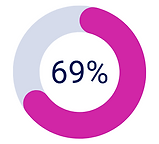
Of sales reps missed quota in 2024. Just 15% of sales teams had more than half their reps hitting 80% or more of target (Ebsta x Pavilion).
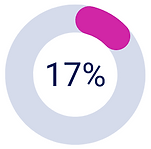
Of reps generate 81% of revenue. The hero rep problem signals a systemic failure in how deals are being qualified and run (Ebsta x Pavilion).

Of deals skip the qualification stage entirely, and 38% skip discovery alignment. These are precisely the stages where Champion identification should begin (Ebsta x Pavilion).
Win rates are not primarily a function of product quality, marketing investment, or even pricing. They are a function of relationship quality, specifically whether a sales team has a genuine Champion who is active and tested early in the deal.
Ebsta's research shows that win rates correlate sharply with stakeholder engagement breadth. Deals with a single stakeholder relationship carry a win rate multiplier of just 0.2x. Deals with ten or more meaningful stakeholder relationships carry a multiplier of 2.4x. The Champion is the person who opens those doors.
The Problem
The Illusion of the Champion
There are two distinct problems here, and most leadership teams have both.
The first is misidentification. Someone on the team has named a Champion, everyone believes they have coverage, and the deal progresses without challenge. The contact is responsive, friendly, and helpful. But when the real decisions are being made, they are not in the room, and if they are, they have no authority to shape the outcome.
The second is absence. There is no Champion pathway at all. The team is selling to a committee with no internal advocate, no one framing their case, and no early warning when things start to move against them.
Both problems feel the same from the outside. The pipeline looks healthy. The contact is engaged. The deal looks like it is progressing. It is not.
"A Champion is not a title we give someone because they like us. It is a verb they perform. If they are not actively getting you access, sharing intelligence you could not get yourself, and amplifying your case in rooms you are not in, then you have a coach or a friend."
Ask any AE to name the Champion in their top five deals. They will. Ask them to describe the last two things that Champion did, not said, to advance the deal. The room gets quieter.
The most common mistake in complex deals: taking a coach or a friend for a Champion. It is not because someone is responsive, engaging, and returns your calls that they are your Champion.
The result is predictable. Deals that feel like they are progressing, right up until they are not. Late-stage surprises. No-decisions. Deals that go dark. The customer liked you. They just never had anyone internal who could actually move it.
The Distinction
The Friend, the Coach, and the Champion
Understanding the difference between these three types of contacts is the most operationally useful thing a revenue leader can do. Here is how they break down in practice.
The Friend
The Coach
The Champion
Likes you
Helpful to you
Guides and directs you
Returns your calls
Shares information
Shares intelligence you could not get yourself
Friendly and engaging
Gives access to others
Gets you access to the Economic Buyer and key stakeholder
No internal influence
Limited formal power
Respected decision-shaper with real influence
Will not stick their neck out
Will not commit their credibility
Actively aligns and navigates outcomes with you
Feels comfortable
Feels like progress
Drives real movement
Risk: false confidence
Risk: mistaken for a Champion
Value: mutual success
The friend feels like an asset. They are engaging, positive, and encouraging. But when the budget committee meets, they are not in the room, and if they are, they have no authority to speak with conviction. The friend can keep a deal alive. They cannot close it.
The coach is more valuable. They give you access, context, and occasionally introductions. Many salespeople who think they have a Champion actually have a coach. The coach helps you understand the deal. The Champion helps you win it. The critical difference is this: a coach does not have the power or the personal stake to put their credibility on the line for your solution.
A true Champion has three non-negotiable qualities:
-
Power and influence: They are respected within their organisation. When they speak, people listen, particularly those with decision and budget authority.
-
Access: They can get a meeting with the Economic Buyer, and other key stakeholders. They understand what matters to them, and know how to frame their problem and the business value your solution will help them achieve.
-
Personal stake: They have something to gain, professionally, financially, or strategically, if this initiative succeeds. That stake is what motivates genuine advocacy, not just polite support.
Around 80% of the conversations about whether to buy, what to buy, and why happen in internal meetings that vendors never see. A coach rarely attends those meetings. A Champion does, and they shape what happens inside them.
The Test
It Is Not What They Say, It Is What They Do
The most reliable indicator of a true Champion is behaviour. Not sentiment, not enthusiasm, not how warmly they speak about your solution. What they actually do on behalf of it.
A genuine Champion will:
-
Proactively set up introductions to stakeholders you have not met yet, without being asked
-
Share internal intelligence: how the business actually thinks about this problem, who the real blockers are, what competitors are doing, and key meetings you need to be involved in.
-
Tell you when you are at risk, even when it is uncomfortable for them to do so
-
Help you shape the evaluation criteria and decision process in your favour
-
Show up to internal meetings armed with your business case and fight for it
-
Get you access to the Economic Buyer, and help you prepare and position your value for that conversation
If your contact is not doing these things with some consistency, and without you having to push for each one, you have a coach at best and a friend at worst.

The Test
The Champion Test
The fastest way to test whether you have a true Champion is to make a request that requires them to take an internal risk. Ask them to arrange a direct conversation with the Economic Buyer. Ask them to share the internal evaluation scorecard. Ask them to represent your case in a stakeholder meeting you cannot attend.
How they respond, not what they say but whether they do it, tells you everything you need to know.
Champion Testing Questions
-
Can you help me understand how the Economic Buyer is thinking about this decision right now?
-
Would it be possible for us to meet with them directly so we can make sure we are addressing what matters most to them?
-
How is our proposal landing internally compared to the alternatives? What are the main concerns?
-
Are there people in this evaluation we have not spoken with yet who will have a view on the outcome?
-
If this decision stalls, what is most likely to cause that, and what would help move it forward?
A friend gives polite, comfortable answers to these questions. A coach gives useful partial answers.
A Champion gives you the real picture and proactively explores what to do about it.
The Evidence
Why Early Champions Win More Deals
The data on Champion timing is unambiguous. Teams that identify and develop a genuine Champion early in the sales cycle, before the formal evaluation process locks in, consistently outperform those that focus on Champion quality only at late stage.
“Champions are an enabler, they help your team validate all the other key deal variables.”
Early in a deal, your Champion has the most leverage. They can shape how the problem is defined. They can influence who sits on the evaluation committee. They can pre-frame the decision criteria before your competitors have had a chance to do so. By the time a formal RFP is issued, much of the game is already over. Whether you are winning or losing is largely a function of what your Champion did, or did not do, in the three months prior.
Higher win rate multiplier for deals with broad stakeholder engagement versus single-threaded deals. Your Champion is the person who opens those doors (Ebsta x Pavilion).
2.4x
Increase in win rates when a structured qualification process, including rigorous Champion qualification, is fully applied versus deals where it is not (Ebsta x Pavilion).
311%
Revenue teams are not missing Champions because Champions do not exist in their accounts. They are missing them because the process does not systematically look for them early enough, and does not test for them behaviourally once they are named.
What To Do
What Good Champion Management Looks Like
For revenue leaders looking to make Champion quality a genuine operational lever, three changes tend to have the most impact.
1. Change the Definition in Your Team
Start with alignment on language. If your team defines a Champion as the person who is most helpful to us, you will continue to mistake friendliness for advocacy. Formally redefine the Champion as someone who has power and influence, access to the Economic Buyer, a personal stake in the outcome, and a track record of making things happen. Write it into your qualification framework. Make it part of your deal reviews.
2. Test, Do Not Assume
Make a practice of setting specific asks for every contact your team identifies as a Champion, and tracking whether those asks are fulfilled. If a supposed Champion has not secured a single introduction, shared a single piece of internal intelligence, or done a single thing that required them to put their credibility on the line, they are not a Champion. This is not a harsh standard. It is an accurate one.
3. Build Champions Intentionally
Not every deal comes with a pre-existing Champion. Champion creation is as important a skill as Champion identification. This means finding influential individuals inside the account who have a genuine problem your solution can solve, helping them articulate and quantify that problem in terms their organisation cares about, and equipping them with the internal business case they need to become advocates. The most effective enterprise sellers spend as much time developing their Champion's internal positioning as they do develop their own external pitch.
What To Do
What to Do When You Have No Champion
When you reach a significant milestone, say a proposal or commercial conversation, without a genuine Champion, the deal is at serious risk. The rescue play is not to move faster. It is to pause, be honest internally about what you actually have, and go back to identify and develop one.
That means finding the person in the account who has the most to gain from this initiative succeeding, understanding what success looks like for them personally, and starting to equip them. It takes time that feels uncomfortable when a deal is already in stage. It is still the right move. Pressing forward without a Champion is not a strategy; it is hope.
“Your Champion's ability to win internally is a direct function of what you have given them to work with."

What To Do
Implications for Revenue Leadership
If you run a revenue organisation with meaningful enterprise deal flow, the Champion question belongs in every pipeline review. Not as a checkbox ('do we have a Champion identified?') but as a genuine diagnostic: what has our Champion done in the last two weeks that demonstrates they are actively working this deal internally?
The pipeline discipline question is straightforward: would you let an opportunity sit at a high forecast probability without evidence of Champion activity? In most organisations, the answer is yes. The pipeline looks healthy. The stage is advanced. The contact is responsive. But the deal is not progressing in the place that matters, inside the customer's organisation.
Building Champion quality into your pipeline hygiene process is not an administrative task. It is the highest-leverage thing you can do to improve late-stage win rates without changing your product, your pricing, or your headcount.
What To Do
Closing Thought
You do not win enterprise deals. Your Champion wins them for you. You need to make sure they are real, they are equipped, and they are active.
Gartner's data is clear: buyers spend only 17% of their journey with vendors. Ebsta's data is clear: deals with broad stakeholder engagement dramatically outperform single-threaded ones. The evidence across thousands of deals is equally clear: the most common mistake in complex sales is misidentifying a coach or a friend as a Champion, or failing to notice there is no Champion at all.
The question for every revenue leader is a simple one: in your top ten deals right now, how many of those supposed Champions have actually done something in the last thirty days that only a true Champion would do?
If the answer makes you uncomfortable, the good news is that this is one of the few variables in enterprise sales entirely within your team's control.
Sources & Further Reading
Ebsta x Pavilion — B2B Sales Benchmarks 2024 (4.2M opportunities, $54B revenue)
Ebsta x Pavilion — B2B Sales Benchmarks 2023
Forrester — State of Business Buying 2024
Gartner — B2B Buying Behaviour Research 2024-2025
Gartner — Sales Survey: 74% of B2B Buyer Teams Demonstrate Unhealthy Conflict, May 2025
MEDDIC Academy — Champion Qualification Framework (Darius Lahoutifard)
MEDDICC.com — Champion vs. Coach distinction
HubSpot — 2024 Sales Trends Report
Who We Are
Tekweni Revenue Performance
Tekweni is a B2B revenue performance consultancy. We work with CROs and Leaders in businesses where the sales cycle is complex, the deals are large, and the cost of getting it wrong is high.
We don't try to improve everything at once. Our approach is to identify the Vital Few commercial priorities that will actually move the needle, and build the discipline to execute them consistently.
Our work spans pipeline quality, deal execution, GTM strategy, and the leadership habits that separate high-performing revenue organisations from those that rely on heroics.
“We focus on the two or three changes that will actually move your revenue, and we build the discipline to make them stick.
We call these the Vital Few.”
